
TradeStart
(2024) Student Project (Type) Research, UI/UX
TradeStart is a transformative program designed to address homelessness while simultaneously tackling the shortage of skilled tradespeople in the U.S.
We empower individuals experiencing homelessness by teaching them skills and trades in a mentorship program where they help to build low- income housing in their community in exchange for a fair wage and certifications that will benefit them in future trade jobs.
At TradeStart, we hope to rehabilitate peoples lives and the community.
Overview


Team
According to the January 2022 PIT Count, 582,462 people were experiencing homelessness across America, a notable 72 percent of this demographic are individuals.
Initial Research
California, New York, Florida, Washington, and Texas account for 55 percent of people experiencing homelessness.
40 percent of people experiencing homelessness live unsheltered.
Homelessness has been on the rise since 2017, experiencing an overall increase of 6 percent.
Insufficient income and lack of affordable housing are the leading causes of homelessness.
The application rate for technical jobs dropped by 49 percent between 2020 and 2022.
79 percent of firms need help finding electricians.
There were 388,345 jobs posted for skilled trades-related workers between May and June of last year, a 50 percent increase from pre-pandemic levels.
The industry needs to attract about 546,000 more workers. The workforce participation rate is only 62%
As America de-industrialized in the second half of the 20th century, education was reimagined to emphasize seeking four-year degrees as opposed to traditional trade jobs.
Interview Research
Empathy Maps
General Contractor
Thinks
I am worried about a possible labor shortage.
Wonders why the general education curriculum stoped exposing students to trade jobs.
The younger generation isn’t interested in trade jobs anymore.
How can we attract more individuals to pursue careers in the trades?
Feels
I feel like I can’t turn anyone away because I can’t find skilled workers.
I feel concerned about the long-term sustainability of the industry.
I feel nervous.
I feel motivated to bridge the gap and foster interest in the trade careers.
Individual Experiencing Homelessness
Thinks
I want to work, but the circumstances make it so hard.
I need opportunities and support to rebuild my life.
How can I break this cycle of unemployment ?
I wish I had someone to guide me through this.
Feels
I feel invisible to employers.
I feel shame because of my inability to secure stable employment.
I feel like I am not good with technology these days.
I long for stability and a chance to rebuild my life.
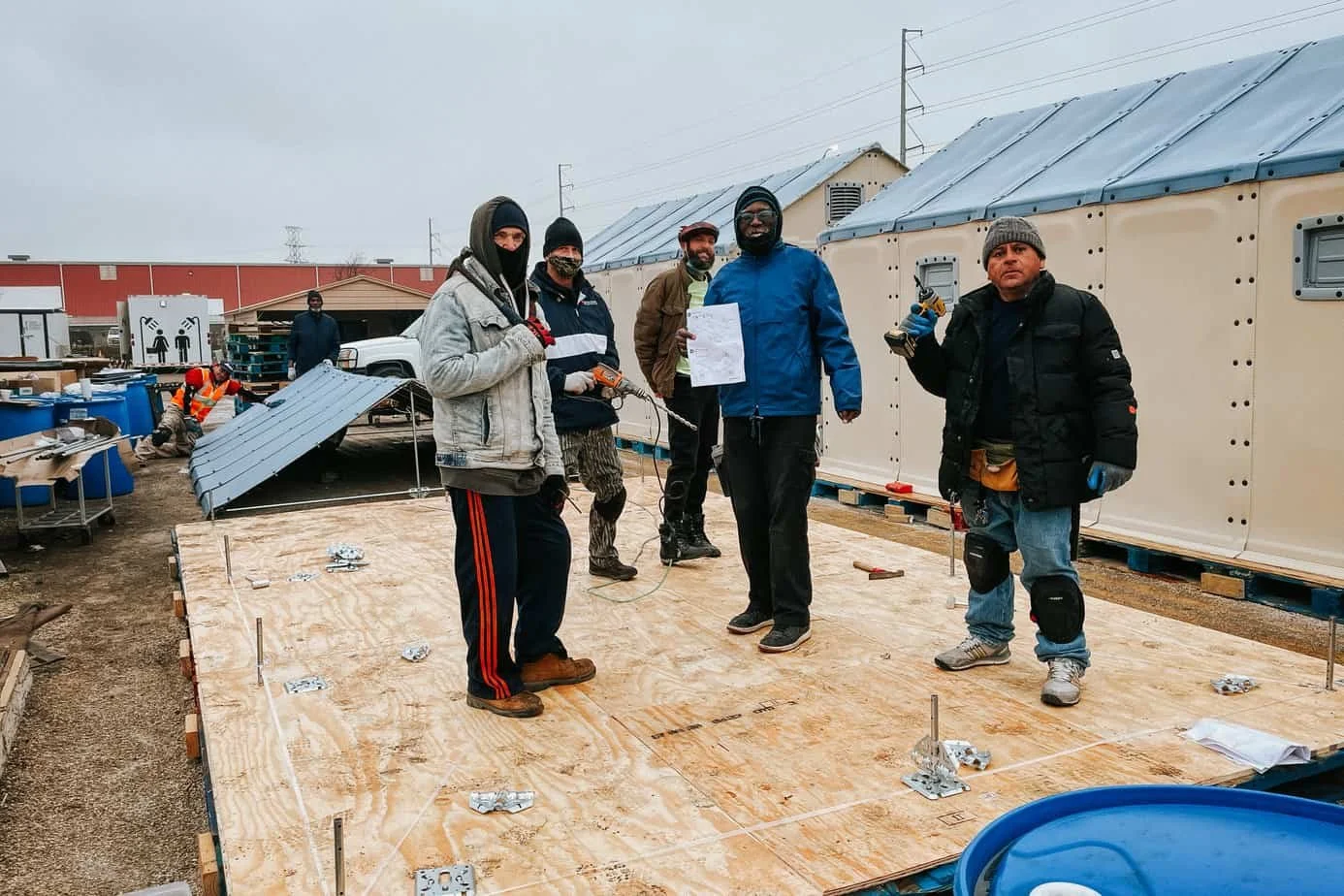
Workforce First is an alternative work program that offers people experiencing homelessness the opportunity to earn a living wage while being of service to their community.
Participants engage in the work of large-scale environmental clean up and invasive species removal. Participants earn a dignified wage of $20 an hour and are provided lunch and transportation to the work site. The program identifies eligible workers through a combination of partnering organizations, and their own street outreach.
The only requirement to join the work force first program is that an individual is experiencing homelessness, is over 18, and that they may otherwise be panhandling.
Competitor Landscape

Execution



Partnership Landscape
-
Texas Homeless Network (THN) is a non-profit membership-based organization helping communities strategically plan to prevent and end homelessness. THN works to end homelessness in Texas by collaborating with all communities, large and small, across the state to build systems to achieve this goal.
In partnership with the Texas Homeless network, TradeStart will offer their programs to several of their shelters across Texas.
Ideally, TradeStart will launch its operations in Houston, Texas, establishing a foothold and expand from there.
As part of this initiative, TradeStart will allocate financial resources to shelters that opt-in, supporting the establishment of permanent shelter facilities and computer labs integral to the program’s implementation.
-
D.R. Horton’s paid internship program gives people a chance to work alongside some of the most experienced professionals in the industry.
Interns work hands on, gaining valuable education and experience and make smooth transitions into the residential construction industry.
Through mentoring, students are exposed to various areas of the residential homebuilding process.
Given the current internship program in place, there is a seamless opportunity to integrate it with our own initiative. This would enable us to match their mentors with our participants.
Through partnership with D.R. Horton, TradeStart will provide on-sight training through a specialized internship catered to individuals in our program.
-
CDBG allocates funds to specific cities and counties aimed at enhancing community development initiatives.
These resources are utilized to facilitate the construction of residential units, improve neigh- borhoods, and provide support for individuals facing financial constraints within these regions.
Cities and counties receiving the CDBG have the flexibility to utilize these funds across various avenues of community improvement.
With access to the (CDBG), TradeStart can facilitate funding for Penn Foster certification programs, transportation to job sites, and acquisition of necessary residential homebuilding materials.
-
Penn Foster is an online education program that offers online skilled trades training programs. These trainings are offered online with self-paced scheduling that allows for one to work at their own speed.
It offers certification for trades such as Construction Trades, Residential Electrician, Home Remodeling & Repair and Plumbing.
In partnership with Penn Foster, TradeStart will offer a free certifications for individuals seeking expertise in more skilled trades.
Through the resident portal accessible on the TradeStart website, program participants will have the opportunity to pursue various certifications provided by Penn Foster.


Trademark


Design Elements

Challenge
TradeStart is a transformative program designed to address homelessness while simultaneously tackling the shortage of skilled tradespeople in the U.S.
We empower individuals experiencing homelessness by teaching them skills and trades in a mentorship program where they help to build low- income housing in their community in exchange for a fair wage and certifications that will benefit them in future trade jobs. TradeStart is a transformative program designed to address homelessness while simultaneously tackling the shortage of skilled tradespeople in the U.S.
We empower individuals experiencing homelessness by teaching them skills and trades in a mentorship program where they help to build low- income housing in their community in exchange for a fair wage and certifications that will benefit them in future trade jobs.
